






"Booth D-3"
Polly Apfelbaum, Frank Bowling, Ricardo Brey, Melvin Edwards, Coco Fusco, Harmony Hammond, Betty Parsons, Joan Semmel, Valeska Soares, Lorraine O'Grady
Frieze Art Fair
Randall's Island Park

+1 212-463-7488 e-mail:

Alexander Gray Associates
510 West 26 Street, New York NY 10001 United States+1 212 399 2636 e-mail:

May 3 > 6, 2019
 |
 |
 |
 |
 |
 |
 |
 |
Booth D-3
Alexander Gray Associates presents an exhibition of recent and historical paintings, sculptures, and works on paper by nine Gallery artists, including Polly Apfelbaum, Frank Bowling, Ricardo Brey, Melvin Edwards, Coco Fusco, Harmony Hammond, Betty Parsons, Joan Semmel, and Valeska Soares. In addition to this display, the Gallery exhibits work by Lorraine O'Grady as part of Frieze New York's Just Above Midtown (JAM) tribute section.
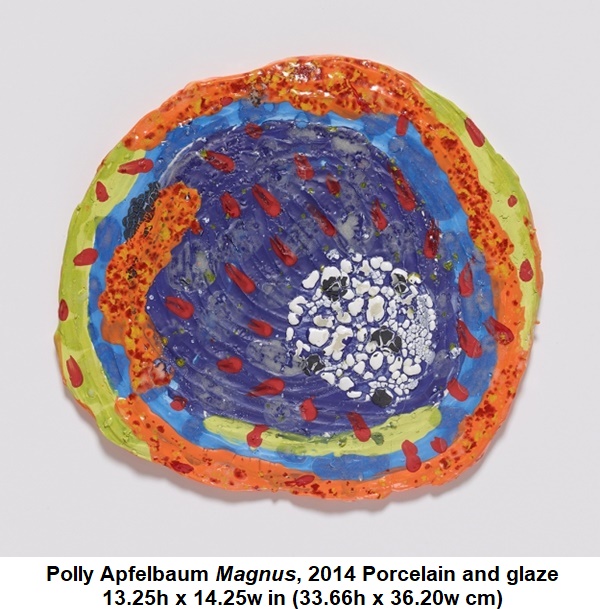
Polly Apfelbaum's artistic practice is distinguished by a hybridized aesthetic that fuses traditions of painting, craft, and installation. In her recent wall-based ceramics, the names of the individual pieces such as Georgie (2015) were inspired by street names near Greenwich House Pottery where the works were created. As the series expanded, Apfelbaum began including other streets in New York City that shared people's names and eventually, she began using arbitrary names as titles.
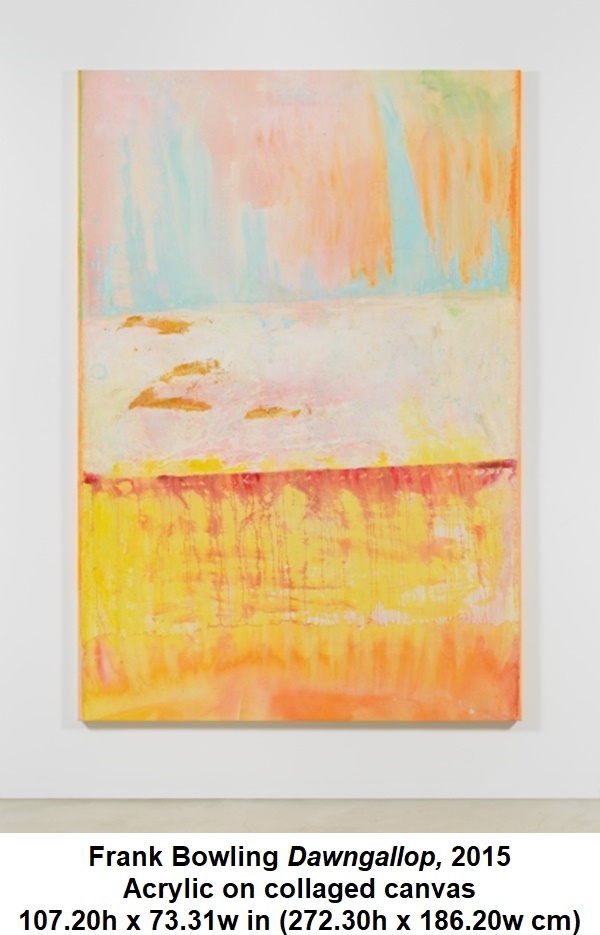
For over five decades, Frank Bowling's painting practice has been defined by its integration of autobiography and postcolonial geopolitics into abstraction. In works like Dawngallop (2015), Bowling plays with texture and color. Expressive and emotive, the canvas' composition and surface, which feature horizontal bands of dripped paint, draw on the layered swaths of color of the artist's 1970s Poured Paintings and reference the history of Color Field painting.
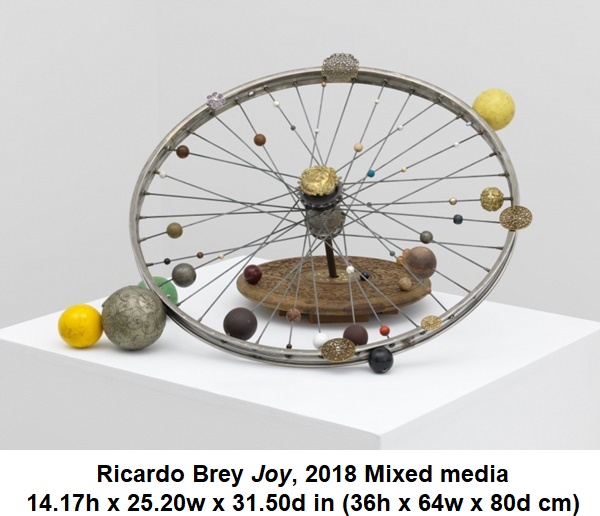
Since the late 1970s, Ricardo Brey's multidisciplinary practice has focused on his research into the origins of humanity and humankind's place in the world. Featuring a bicycle wheel adorned with beads and decorative elements, Joy (2018) suggests the movement of stars and planets. Evoking the vastness of space and the journey of celestial bodies, the work emerges as a meditation on the boundlessness of the cosmos and mankind's ultimate insignificance within it.
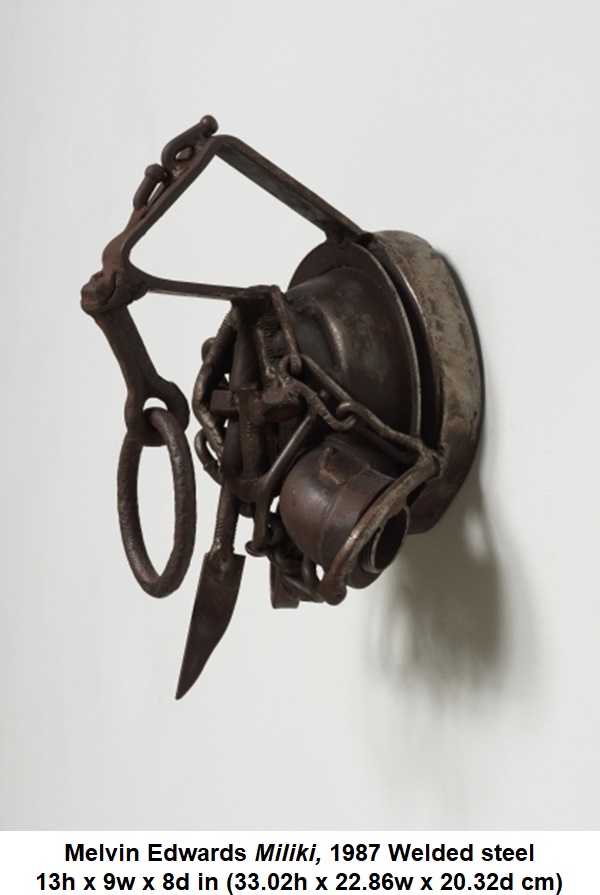
Melvin Edwards is a pioneer in the history of contemporary African American art. For more than five decades, he has created sculptures from agricultural implements, scrap metal, and tools that engage with the history of race, labor, and violence, as well as with themes of the African Diaspora. Festac 77 Lagos Reunion (1985) commemorates the 1977 Second World Black and African Festival of Arts and Culture (commonly referred to as Festac '77). Festac marked a turning point in Edwards' artistic practice. As he reflected, "The Diaspora, the variety of places and people that we consist of ... It was more than exciting—it was important."
Artist and writer Coco Fusco presents her new series The Undiscovered Amerindians Tour (1992/2019). Consisting of a selection of documentary photographs from her iconic 1992–94 performance Two Undiscovered Amerindians Visit the West with Guillermo Gómez-Peña, the series revisits the performance's historical impact 25 years after its original presentation. Satirizing the anthropological gaze, Fusco reflects on early-1990s multiculturalism and postcolonial activism.
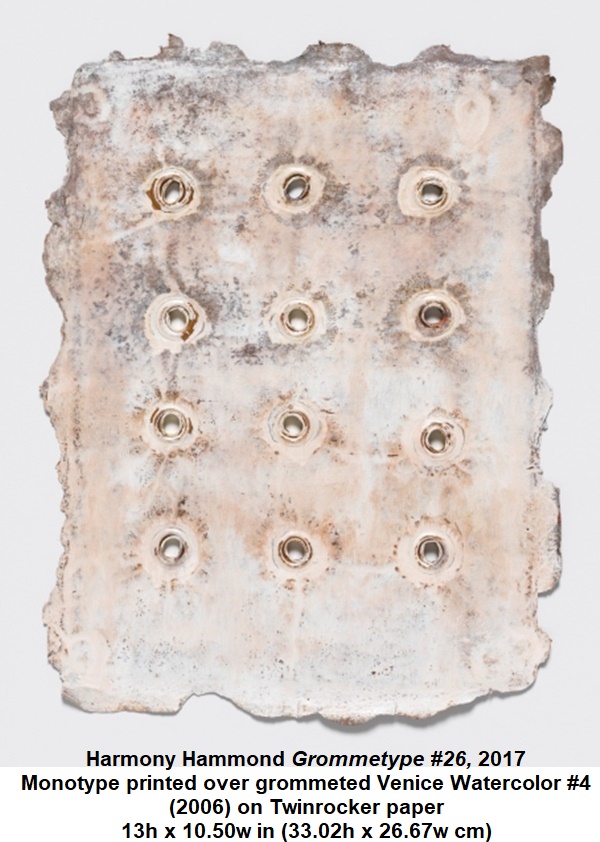
Harmony Hammond's recent paintings' focus on materiality and the indexical derives from and remains in conversation with her feminist work of the 1970s. Silencia (2016) belongs to Hammond's series of "near monochrome" paintings, which simultaneously engage with and challenge the narrative of modernist painting. Near monochrome, the artist insists, positions painting as a site of negotiation between what exists inside and outside the picture plane.
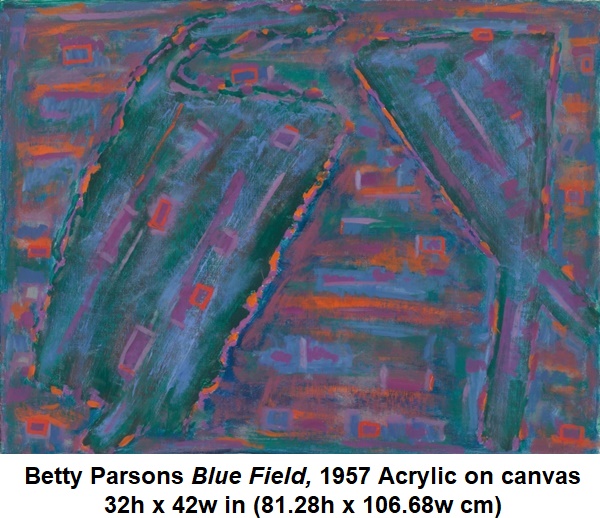
Betty Parsons trained as a landscape painter, first turning to abstraction in the late-1940s. The vividly colored structure of Blue Field (1957) illuminates her deep connection to both traditions. With its loose division of the canvas into geometric sections realized in expressive purple and orange lines, it resembles an aerial view of a rural scene. At the same time, its underlying layer of blue-green suggests a nod to the large expanses of color that define Color Field painting.
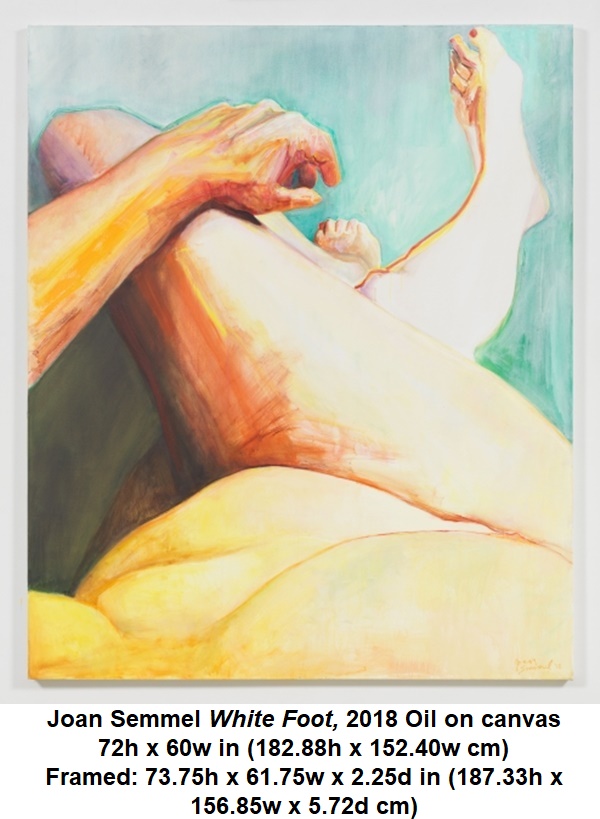
Since the 1970s, Joan Semmel has centered her practice around representations of the body from a female perspective, often taking her own figure as subject. White Foot (2018) belongs to a recent group of paintings defined by the artist's perspective of looking down at her body. The figure fills the frame in a manner that echoes the in-camera cropping of the photographs Semmel takes as the basis for her compositions, with torso and legs generating a landscape of lines and curves.
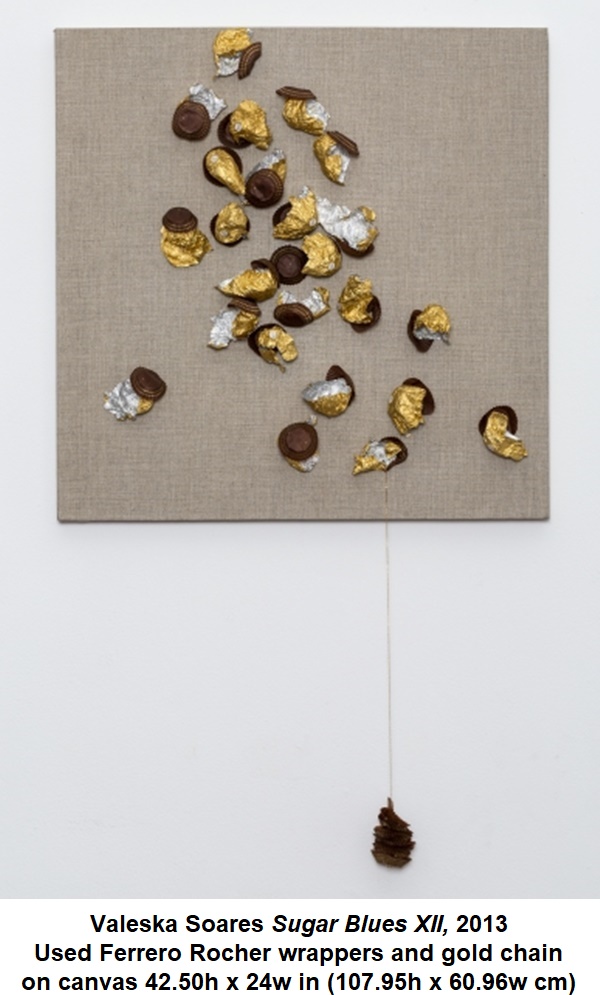
Utilizing tools of minimalism and conceptualism, Valeska Soares' practice embraces emotion and humanity, mining territories of love, loss, and memory. In You and I (2011), she connects two gilded teacups with a taut gold chain. Inscribed with "You" and "I," the cups suggest conflicting readings of entanglement, co-dependency, desire, and infatuation, illustrating the ultimate conflict: finding equilibrium between love and longing.
Alexander Gray Associates presents an exhibition of recent and historical paintings, sculptures, and works on paper by nine Gallery artists, including Polly Apfelbaum, Frank Bowling, Ricardo Brey, Melvin Edwards, Coco Fusco, Harmony Hammond, Betty Parsons, Joan Semmel, and Valeska Soares. In addition to this display, the Gallery exhibits work by Lorraine O'Grady as part of Frieze New York's Just Above Midtown (JAM) tribute section.
Polly Apfelbaum's artistic practice is distinguished by a hybridized aesthetic that fuses traditions of painting, craft, and installation. In her recent wall-based ceramics, the names of the individual pieces such as Georgie (2015) were inspired by street names near Greenwich House Pottery where the works were created. As the series expanded, Apfelbaum began including other streets in New York City that shared people's names and eventually, she began using arbitrary names as titles.
For over five decades, Frank Bowling's painting practice has been defined by its integration of autobiography and postcolonial geopolitics into abstraction. In works like Dawngallop (2015), Bowling plays with texture and color. Expressive and emotive, the canvas' composition and surface, which feature horizontal bands of dripped paint, draw on the layered swaths of color of the artist's 1970s Poured Paintings and reference the history of Color Field painting.
Since the late 1970s, Ricardo Brey's multidisciplinary practice has focused on his research into the origins of humanity and humankind's place in the world. Featuring a bicycle wheel adorned with beads and decorative elements, Joy (2018) suggests the movement of stars and planets. Evoking the vastness of space and the journey of celestial bodies, the work emerges as a meditation on the boundlessness of the cosmos and mankind's ultimate insignificance within it.
Melvin Edwards is a pioneer in the history of contemporary African American art. For more than five decades, he has created sculptures from agricultural implements, scrap metal, and tools that engage with the history of race, labor, and violence, as well as with themes of the African Diaspora. Festac 77 Lagos Reunion (1985) commemorates the 1977 Second World Black and African Festival of Arts and Culture (commonly referred to as Festac '77). Festac marked a turning point in Edwards' artistic practice. As he reflected, "The Diaspora, the variety of places and people that we consist of ... It was more than exciting—it was important."
Artist and writer Coco Fusco presents her new series The Undiscovered Amerindians Tour (1992/2019). Consisting of a selection of documentary photographs from her iconic 1992–94 performance Two Undiscovered Amerindians Visit the West with Guillermo Gómez-Peña, the series revisits the performance's historical impact 25 years after its original presentation. Satirizing the anthropological gaze, Fusco reflects on early-1990s multiculturalism and postcolonial activism.
Harmony Hammond's recent paintings' focus on materiality and the indexical derives from and remains in conversation with her feminist work of the 1970s. Silencia (2016) belongs to Hammond's series of "near monochrome" paintings, which simultaneously engage with and challenge the narrative of modernist painting. Near monochrome, the artist insists, positions painting as a site of negotiation between what exists inside and outside the picture plane.
Betty Parsons trained as a landscape painter, first turning to abstraction in the late-1940s. The vividly colored structure of Blue Field (1957) illuminates her deep connection to both traditions. With its loose division of the canvas into geometric sections realized in expressive purple and orange lines, it resembles an aerial view of a rural scene. At the same time, its underlying layer of blue-green suggests a nod to the large expanses of color that define Color Field painting.
Since the 1970s, Joan Semmel has centered her practice around representations of the body from a female perspective, often taking her own figure as subject. White Foot (2018) belongs to a recent group of paintings defined by the artist's perspective of looking down at her body. The figure fills the frame in a manner that echoes the in-camera cropping of the photographs Semmel takes as the basis for her compositions, with torso and legs generating a landscape of lines and curves.
Utilizing tools of minimalism and conceptualism, Valeska Soares' practice embraces emotion and humanity, mining territories of love, loss, and memory. In You and I (2011), she connects two gilded teacups with a taut gold chain. Inscribed with "You" and "I," the cups suggest conflicting readings of entanglement, co-dependency, desire, and infatuation, illustrating the ultimate conflict: finding equilibrium between love and longing.
 |
Polly Apfelbaum |
|
|
Frank Bowling |
|
|
Ricardo Brey |
|
|
Melvin Edwards |
|
|
Coco Fusco |
|
|
Harmony Hammond |
|
|
Betty Parsons |
|
|
Joan Semmel |
|
|
Valeska Soares |
|
|
Lorraine O’Grady |
PREVIEW (Invitation Only):
Wednesday May 2
Thursday May 3: 11am - 8pm
Private View:
Thursday , May 3: 5pm - 8pmThursday May 3: 11am - 8pm